Foreign Agents’ or Lifelines? Colorado Ugandans React as Uganda Parliament Passes Sovereignty Bill
Uganda’s Parliament has passed the contentious Protection of Sovereignty Bill, 2026, under tight security and amid sharp criticism from rights groups, opposition MPs, Colorado Ugandans, and sections of the business community. Supporters of the law say it is designed to shield Uganda from “undue external interference,” especially in politics and governance, by targeting individuals and organisations they describe as “agents of foreigners.” Critics, however, warn that its sweeping language and harsh penalties could criminalise ordinary citizens, shrink civic space, and damage the relationship between Uganda and millions of its people who now live and work in places like Colorado.
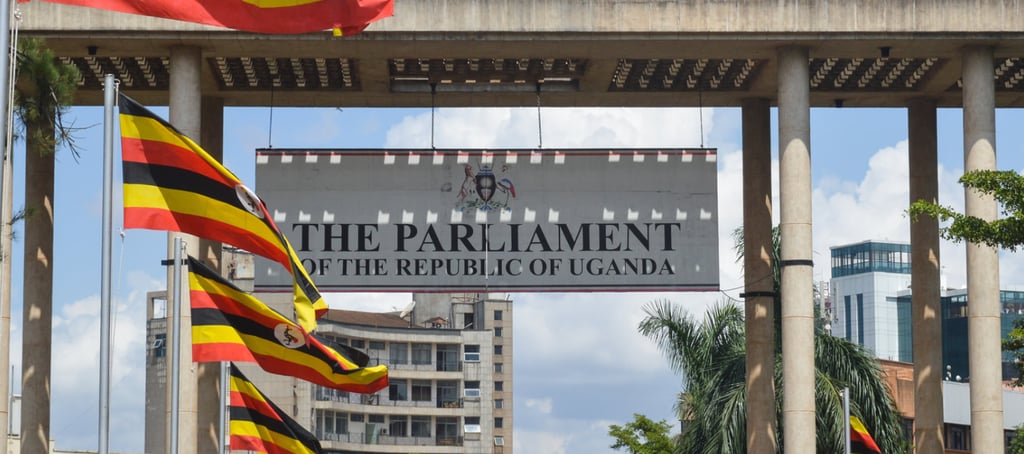
Today, 5th May 2026, Uganda’s Protection of Sovereignty Bill, 2026, passed under tight security in Parliament, is reverberating far beyond Kampala—reaching living rooms, church halls and community centres as far away as the U.S. state of Colorado. For the growing community of Colorado Ugandans, the new law has turned a long‑standing role as lifelines for families back home into a source of anxiety, uncertainty and political suspicion.
The government defends the law as a necessary shield against “undue external interference” in Uganda’s politics and governance. It targets individuals and organisations seen as “agents of foreigners,” accused of advancing external interests against those of the state. Critics, however, argue that the law is drawn so broadly that it risks criminalising ordinary citizens, constricting civic space and poisoning relations between Uganda and its own people living abroad.
At the centre of the controversy is the way the law treats foreign‑linked funding. It criminalises acts deemed to promote foreign interests over Uganda’s and gives the state authority to label organisations or individuals receiving foreign money as “agents of foreigners,” punishable by heavy fines and long prison terms. Earlier drafts went even further, explicitly classifying citizens living outside Uganda as “foreigners” and tightening controls on funds sent from abroad—language that triggered an outcry from Ugandans overseas, including those in Colorado. Although Parliament later removed that clause, the damage to trust has been done.
For Colorado Ugandans, this is not an abstract legal debate. Their lives are deeply woven into the remittance economy. Many juggle multiple jobs—driving ride‑share, working in hospitals and care homes, staffing warehouses or offices—to send money home for school fees, medical treatment, rent, burial expenses and small development projects. These are not speculative investments; they are obligations rooted in family, culture and faith.
Now, Colorado Ugandans fear that the very remittances that keep relatives afloat could, in some circumstances, attract suspicion. Families in Uganda are asking whether receiving support from a child or sibling abroad might one day be questioned, especially if funds pass through organisations, churches or community groups. Some worry that cautious local leaders may discourage partnerships with diaspora‑linked initiatives, fearing that being associated with foreign‑funded projects could invite scrutiny or sanctions.
The law’s potential impact on community initiatives is especially troubling. Colorado Ugandans have long pooled resources to support schools, health centres, churches and youth groups in their home districts. A fundraising drive in a Colorado city can translate into classroom blocks, water tanks or scholarship schemes in Uganda. But if a school project includes leadership training, civic education or rights awareness, could it be branded “political”? If a church or NGO supported by Colorado Ugandans speaks out about governance or human rights, could it be accused of advancing foreign interests?
Leaders in Colorado’s Ugandan community say such questions are already reshaping discussions. Some associations are considering tightening their internal governance, improving documentation and seeking clearer legal advice for partners in Uganda. Others are quietly reviewing which types of projects they can safely support. There is concern that important but sensitive work—on accountability, human rights or civic participation—could be scaled back or forced underground, weakening a vital link between citizens and the state.
The emotional impact is equally profound. For decades, official rhetoric in Kampala has celebrated the diaspora as “development partners,” urging them to invest, remit and promote Uganda’s image abroad. Now, Colorado Ugandans hear themselves described in the same breath as “foreign agents” and “economic saboteurs.” Many feel betrayed: they work long hours in a foreign land, often at great personal sacrifice, only to find their solidarity recast as suspicion.
In community meetings and WhatsApp groups, frustration is palpable. Some voice anger that Parliament appeared willing, at one stage, to legally treat citizens abroad as foreigners. Others speak of fear: fear that a beloved parent, pastor or head teacher in Uganda might one day be summoned by security agencies because of money they received from Colorado. For some, the safest response seems to be to keep sending only to close family, avoid supporting organisations, and stay away from anything that might be interpreted as “political”—even when their conscience tells them otherwise.
Yet the story is not only one of fear. The Sovereignty Bill has also sparked a new wave of organising among Colorado Ugandans. Community leaders are calling town‑hall style meetings to explain the law, gather views and explore collective responses. Some are drafting petitions and statements, insisting that genuine sovereignty cannot be built by alienating citizens abroad who have kept families and communities going through economic crises, pandemics and political instability.
They argue that Colorado Ugandans are not foreign interests; they are Ugandan citizens, children of the same villages, products of the same schools and churches. Their money pays school fees in rural districts and major towns alike, buys medicine in local clinics, and helps rebuild homes after disasters. To treat that support as inherently suspect, they say, is to misunderstand both the reality of Uganda’s economy and the heart of its people.
Officials maintain that the law is aimed at curbing coordinated political interference, not ordinary family support, and point to amendments that removed the most explosive diaspora‑related clauses. But many Colorado Ugandans remain unconvinced. In their view, the danger lies not only in the text of the law but in how it may be interpreted and enforced in a context where security agencies already enjoy wide discretion.
As Uganda awaits detailed regulations and the first test cases under the new Act, Colorado Ugandans find themselves at a crossroads. Some may reduce their engagement with organisations in Uganda, focusing narrowly on family. Others may double down on advocacy, pushing for safeguards that clearly protect legitimate remittances and philanthropy. What is clear is that a law passed under tight security in Kampala has opened a profound conversation in Colorado about identity, loyalty and the meaning of sovereignty.
In the meantime, community halls in Colorado empty slowly after meeting after meeting. People drift out into the cool evening air, phones buzzing with new messages from home. For all the legal and political complexity, the core dilemma they face remains painfully simple: how to keep loving and supporting Uganda, without putting Uganda—and their loved ones—at risk.