
Locked Doors and Narrow Paths: What America’s New Immigration Push Means for Colorado Ugandans
When headlines began circulating about a new immigration bill that would axe the Green Card lottery and end sponsorship for parents, many Colorado Ugandans felt something more than distant concern. They felt the floor shift beneath the long, fragile bridge that connects their lives in the Rockies to loved ones in Kampala, Gulu, Mbarara, and beyond. For a community that has spent years telling relatives, “Be patient, there are still pathways,” the Americans First Immigration Act lands like a blunt message: the doors are closing, and the windows are getting smaller.

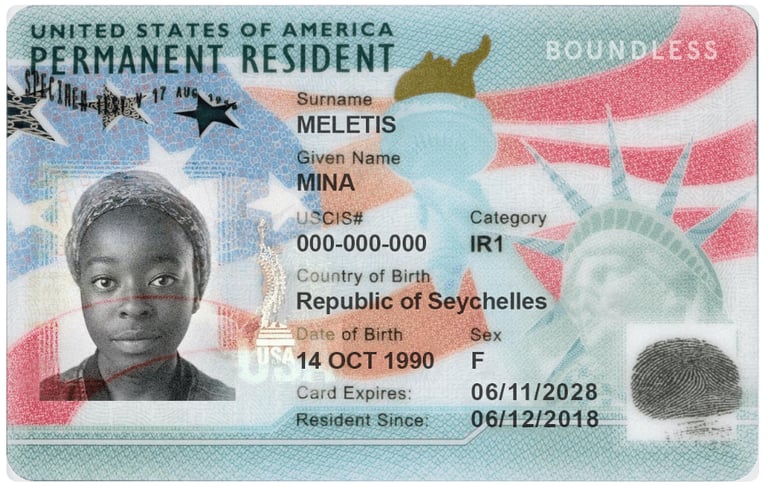
When headlines began circulating about a new immigration bill that would axe the Green Card lottery and end sponsorship for parents, many Colorado Ugandans felt something more than distant concern. They felt the floor shift beneath the long, fragile bridge that connects their lives in the Rockies to loved ones in Kampala, Gulu, Mbarara, and beyond. For a community that has spent years telling relatives, “Be patient, there are still pathways,” the Americans First Immigration Act lands like a blunt message: the doors are closing, and the windows are getting smaller.
At the heart of the proposed law is a clear break from the system that allowed thousands from underrepresented countries — including Uganda — to come to the United States through the Diversity Visa Lottery. For many families across Uganda, the “DV” was not just a program; it was a dream machine, a once-a-year moment when someone in the family might be pulled out of the long queue of uncertainty and into a new future. In living rooms in Colorado Springs, Aurora, and Denver, Colorado Ugandans can name cousins, neighbors, and church members who made it here because of that lottery. Now, lawmakers are not just pausing it; they are seeking to bury it.
In its place, the Americans First Immigration Act pushes a narrow, points-based, “merit” system. Instead of chance plus basic eligibility, hopeful migrants would be scored on education levels, English proficiency, military service, and projected income. One of the most striking conditions is that an applicant’s expected salary must be at least double the median wage in the state where they intend to work. In a state like Colorado, already experiencing high wage and cost-of-living pressures, that threshold is not just a filter; it is a wall. For many ordinary Ugandans — teachers, nurses, mid-level professionals, small businesspeople — the idea that they could prove such earnings in advance is almost impossible.
For Colorado Ugandans, this means the profile of who can follow in their footsteps is shifting dramatically. The young relative who’s brilliant but stuck in under-resourced schools; the sibling who runs a small but steady shop in Kampala; the cousin who has been trying the Green Card lottery every year since 2015 — their odds, already steep, shrivel close to zero. The new “ideal” immigrant, as imagined in the bill, is highly credentialed, fully fluent in English, and pre-attached to a high-paying job. In practice, that means more doctors, tech workers, and elite professionals, and fewer ordinary Ugandans who simply want a shot at safety, stability, and a chance to hustle in a new country.
The bill doesn’t stop there. It moves to sharply constrain family-based migration, trimming it down to the bare minimum: spouses and minor children of U.S. citizens and permanent residents. Parents, siblings, and adult children — the very relatives many in the diaspora have promised to “start on the process” for once they are settled — would no longer qualify. For Colorado Ugandans who have spent years juggling their own school fees, car payments, and mortgage deposits while slowly preparing to sponsor a mother, a father, or an adult son, this feels like a betrayal of the basic moral logic they had built their lives around.
In many Ugandan households, the understanding is simple: “You go first, then you pull the rest.” The first child who makes it abroad is not just an individual success story; they become a family strategy. That son or daughter in Colorado is the one who sends money home for siblings’ tuition, pays hospital bills, and eventually, if all goes well, files the immigration papers that reunite at least part of the family. Removing parental and sibling sponsorship strikes at the heart of that social contract. It tells migrants who have played by the rules that their families will remain scattered, permanently separated by oceans and immigration categories.
The emotional impact is already visible. In Colorado’s Ugandan churches and community gatherings, conversations about visas and paperwork, once technical and hopeful, have taken on a new edge of anxiety. Parents in Uganda, aging and facing uncertain healthcare systems, had pinned their hopes on joining their children in the U.S. later in life. Now, those same children — who work long shifts in Denver hospitals, on construction sites in Colorado Springs, or in tech offices along the Front Range — are being told by the proposed law: your parents will never be “eligible” enough.
Economically, the implications ripple in both directions. A more restrictive system will not stop the flow of responsibility from Colorado back to Uganda; it will intensify it. If parents and siblings cannot join their relatives in the U.S., they will remain firmly dependent on remittances. Instead of eventually sharing a household in Aurora or Thornton, families will continue to rely on money transfers to cover medical emergencies or school fees in Masaka and Mbale. The emotional distance will remain large, but the financial tether will tighten.
For Colorado employers, particularly in sectors where Ugandans are present — healthcare support, logistics, customer service, construction, and increasingly professional fields — the changes may have mixed results. On paper, a high-wage, points-based system promises highly skilled workers. In reality, it may reduce the pipeline of motivated, adaptable migrants who are willing to fill gaps in essential but less glamorous roles, and then climb progressively. Many Ugandans in Colorado came not as polished executives but as students, entry-level workers, or diversity lottery winners who turned opportunity into long-term contribution. The new bill appears uninterested in that trajectory; it wants proof of success before arrival.
Socially and spiritually, the Colorado Ugandan community carries a heavy burden of explanation. How do you tell your mother, who has carefully kept every document and vaccination record because “one day we shall apply,” that the category she has been waiting for may soon be erased? How do diaspora leaders explain to newly arrived students that the path to bringing a younger sibling is closing just as they are getting their first American paychecks?
At the same time, the bill — by design or not — sends a message about who is welcome. The retention of a small carve-out for religious workers is a clue: those who fit neatly into the roles and narratives preferred by U.S. policymakers may find a narrow door still open. For many Ugandans in Colorado, whose lives are deeply rooted in churches and faith communities, this exception may feel like both a lifeline and a trap. It risks creating a hierarchy in which some are invited as spiritual laborers while their families remain stuck in precarious situations at home.
Yet if there is one thing that defines Colorado Ugandans, it is the capacity to adapt. This community is made up of people who have already navigated complex visa systems, culture shocks, and career reinventions. They have learned to build lives on uncertain ground, to use community associations, churches, and informal networks as safety nets. The Americans First Immigration Act, with its harsh proposals, will likely spark several responses.
First, it will accelerate efforts to educate the community. WhatsApp groups, Zoom forums, and in-person town halls will quickly become classrooms where immigration attorneys, policy watchers, and community advocates explain what the bill does and what it does not yet do. People will need to understand that it is still a proposal, that laws change through negotiation, and that panic, while understandable, must be channeled into focused action.
Second, it will push more Colorado Ugandans toward civic engagement. Voting, lobbying, and coalition-building with other African, Latino, Asian, and faith communities will take on new urgency. For years, many in the diaspora have viewed U.S. policy debates as something happening “over there.” Now, a bill drafted by politicians they may never have heard of is threatening to reshape their families’ futures. That is the kind of wake-up call that can turn quiet professionals into active advocates.
Third, it may trigger a painful but necessary conversation about diversification of strategy. If America narrows its doors, some families will begin to look more seriously at Canada, Europe, or regional opportunities closer to Uganda. Others will double down on U.S. education and employment routes that fit the new “merit” mold — advanced degrees, specialized skills, and high-earning careers. For younger Colorado Ugandans, this may become another layer of pressure: not only must they succeed for themselves, they must now succeed at a level high enough to keep the door minimally open for anyone who might try to follow.
Ultimately, this story is not just about a bill in Washington; it is about the lives braided between Colorado and Uganda. It is about the grandmother in Masindi who proudly tells her neighbors, “My son is in America,” and hopes she might one day see snow with her own eyes. It is about the nurse in a Colorado Springs hospital who works nights so she can send money home, believing that sacrifice will eventually bring her parents closer. It is about the community leader in Denver who must stand up at a diaspora meeting and say, “The rules are changing again, and we cannot remain spectators.”
The Americans First Immigration Act, if it passes in anything close to its current form, will shrink the legal pathways that many Colorado Ugandans have quietly counted on for years. It will reward only the most economically “valuable” on paper and severely punish the ordinary bonds of family. But it will not erase the determination, creativity, and solidarity that have always characterized this community. In the face of locked doors and narrowing paths, Colorado Ugandans will once again do what they have always done: regroup, rethink, and find new ways to claim their place — not just for themselves, but for the families and futures they refuse to abandon.